Ownership: Lost Independence in the Digital Age
The good old days of video games
When I was younger, buying a game was a thrilling experience. I was excited to go to the store, unwrap the disc, and put it into my console. I could play it whenever I wanted, lend it to a friend, or sell it when I was done. The game was physically in my hands, but that alone was not what made me feel like I owned it.
I had the right to use and sell it. I controlled when and how I played it. I benefited from enjoying it, and I had the responsibility to take care of the disc. Everyone else also recognized that it belonged to me. Nobody had to approve what I did with it, and nobody could remotely take it away.
That experience gives us a useful definition:
Ownership is a socially or legally recognized relationship that gives someone the right to control, use, benefit from, and dispose of something, while also assigning responsibility for it.
Ownership, therefore, is not just possession. It is a relationship made of rights, control, benefits, responsibilities, and recognition.
When buying stopped meaning owning
That experience is largely gone. I can still buy a game, yet today that often means purchasing a license tied to an account. The publisher can change the terms, shut down the servers, remove the game from a store, or restrict my account. I still pay the price, but I no longer receive the same independence after the purchase.
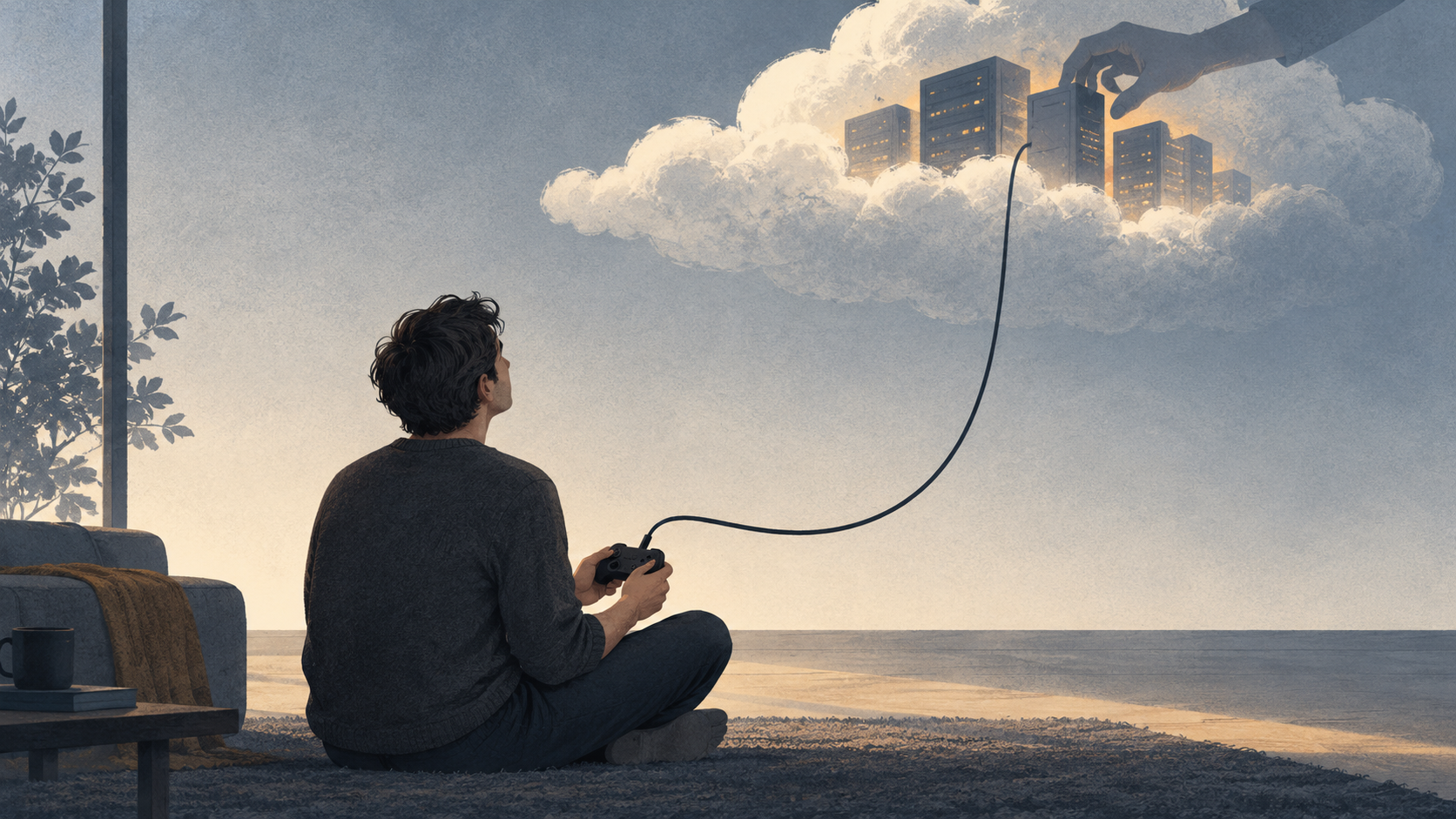
The game may be mine in one sense and not mine in another.
Fragmented ownership
The individual and the service provider now divide the parts of ownership between them. I receive access and the benefit of using the product. The provider, however, keeps much of the control. It maintains the infrastructure, defines the rules, and can sometimes revoke access altogether.
This may look like shared ownership, but we do not jointly own the same thing. I think of it as fragmented ownership: the parts of ownership are distributed between us. The company owns the service and grants me a limited right to use it, while retaining the power that makes this right possible.
This creates a strange imbalance: I bear many of the costs of ownership, while someone else retains much of its power.
That suggests ownership is not always binary. It can be stronger or weaker depending on how its parts are distributed. The more rights and independent control I have, the more meaningful my ownership becomes. The more I depend on someone else’s continued permission, the closer ownership moves toward temporary access.
From video games to everything else
Video games are only one example. Music collections and movie libraries have been replaced by access through streaming platforms. Books, newspapers, and magazines are now often subscription-based. Even software is increasingly licensed rather than sold.
Access is not necessarily bad. It can be cheaper, easier, and far more convenient than owning everything ourselves. I do not need to own a building full of films to watch something on a Friday evening. The problem begins when access is presented as ownership, or when the word buy hides how conditional the purchase really is.
When I buy a couch, the manufacturer cannot normally enter my home and take it away because that model has been discontinued. Yet a digital purchase can become unusable without anything changing on my device. The important difference is not simply physical versus digital. A digital file that I can store, copy, and use independently may give me considerable control. What matters is whether continued use depends on another entity’s cooperation.
The question behind the purchase
We have access to more products, services, and information than ever before. At the same time, we may have less independent control over the things we pay for. That is the paradox of modern ownership: abundance has increased, while permanence has weakened.
Traditional ownership was never absolute. A car is still subject to laws, taxes, and regulations. But there is a meaningful difference between limits imposed by society and a private company retaining the technical ability to switch off something it sold me.
So perhaps the most useful question is not simply, “Do I own this?” It is:
What can I do with it, what does it depend on, and who has the power to take those rights away?
Conclusion: ownership is independence
The digital age has not eliminated ownership. It has divided it. We increasingly buy the right to use something while the power to determine its future remains somewhere else.
For me, that is what makes ownership valuable in the first place: not possession alone, but independence. To own something is to know that it will not disappear because a subscription ended, a server closed, or a company changed its mind.
We are not simply losing the things we own. We are losing some of the independence that made owning them meaningful.